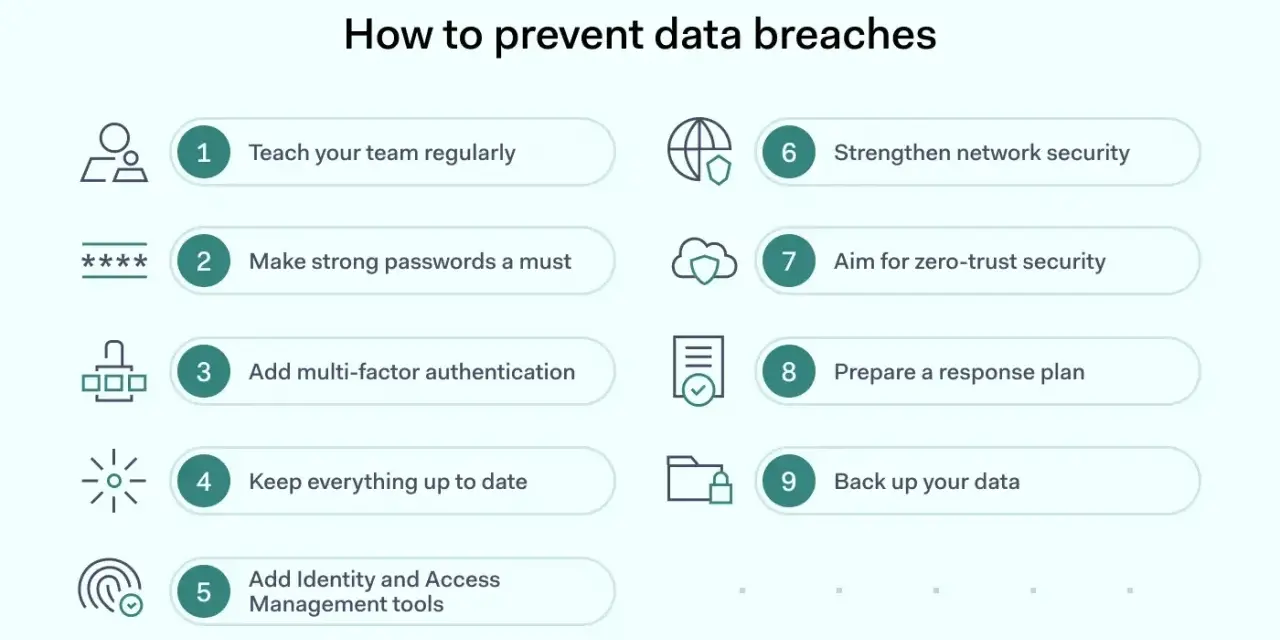
Data security monitoring is the discipline of watching access, movement, and system behaviour closely enough to spot misuse before it becomes a breach. Done well, it helps you catch account takeovers, unusual file transfers, risky configuration changes, and exfiltration patterns early, then turn that evidence into action. For UK organisations, the challenge is not collecting every possible log; it is collecting the right signals, keeping them usable, and respecting privacy while you do it.
What matters most is turning logs into decisions
- Logging is only the base layer. Monitoring becomes useful when logs are centralised, compared with a baseline, and tied to a response path.
- Start with the highest-risk signals. Identity events, privileged actions, file access, cloud changes, and outbound traffic usually reveal trouble first.
- Use more than one detection style. Signature rules catch known threats; behaviour and anomaly analysis catch the unusual patterns attackers prefer.
- Give every alert an owner. If no one is accountable for triage, the monitoring stack is mostly noise.
- UK privacy rules shape the design. Keep monitoring proportionate, document the lawful basis, and retain data only as long as it is genuinely needed.
What monitoring actually does for sensitive data
I treat monitoring as an evidence system, not a dashboard problem. A log entry tells you something happened; a monitoring process tells you whether it matters, whether it fits normal behaviour, and what to do next. The NCSC is right to say logging is the foundation, but the real value comes when the data is analysed against a baseline and tied to a response path.
That matters because the same questions come up in almost every incident: what changed, how far did it spread, who touched it, and did the fix actually work? If your team can answer those quickly, you shorten recovery time and reduce the chance that a small access issue turns into a full breach. In practice, that means monitoring is less about volume and more about decision quality.
It also means the system has to understand context. A single failed login may be harmless. Fifty failed logins followed by a password reset, a new token, and a large export is not harmless. Once you see monitoring as a control loop, the next question is obvious: which signals deserve the most attention?
The signals worth watching first
I start with the signals that tell me whether sensitive data is being accessed, copied, shared, or prepared for exfiltration. Everything else comes later. If you are building from scratch, the table below is the shortest route to useful coverage.
| Signal area | What to watch | Why it matters |
|---|---|---|
| Identity and access | Failed logins, MFA resets, impossible travel, new tokens, new sessions from unfamiliar devices | Account takeover usually shows up here before it reaches the data layer |
| Privileged actions | Role grants, policy changes, service account creation, admin console changes | Privileged abuse creates broad access fast, often with very little noise |
| File and object activity | Mass downloads, unusual sharing, permission changes, bulk deletions, archive creation | This is where silent leakage often shows up in cloud drives and shared repositories |
| Network egress | Unexpected outbound volume, unfamiliar destinations, DNS tunnelling, large uploads to approved services | Data rarely vanishes without leaving a traffic pattern behind |
| Endpoint and server activity | New persistence, suspicious scripts, unusual compression tools, remote execution, credential dumping | Attackers frequently use the endpoint as the launch point for movement and theft |
| Database and SaaS activity | Bulk queries, exports, report generation spikes, schema reads, unusual API access | Trusted apps can still be used to pull out more data than any human should need |
I like to see at least one identity source, one endpoint source, one network source, and one cloud or SaaS source for any sensitive dataset. That mix gives you a better chance of spotting the path of an incident instead of just the final symptom. It is also why single-source monitoring often disappoints: it sees an event, but not the chain behind it.
The most useful mindset here is simple: monitor the places where data can change hands, not just the places where it sits. That leads naturally to the stack and process underneath it.
How to build a monitoring stack that works in practice
The strongest programmes are not the ones with the most tools. They are the ones where the tools are arranged around a clear process. I usually build in seven steps.
- Map the sensitive assets first. Identify the systems, data stores, identities, and business processes that would hurt most if exposed or altered.
- Define normal behaviour. Establish a baseline for login times, data volumes, admin actions, network destinations, and typical export patterns.
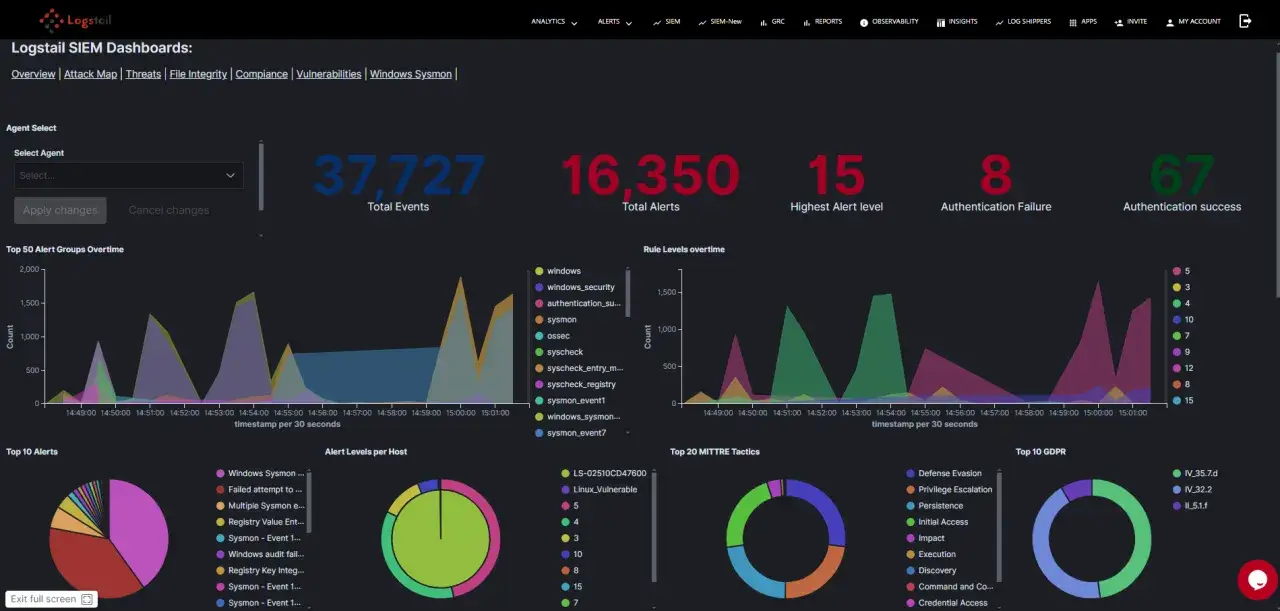
- Centralise the right logs. A SIEM aggregates data from endpoints, servers, applications, databases, and cloud services so you can correlate events instead of chasing them one by one.
- Add detection layers. Use EDR for endpoint behaviour, DLP for policy-driven data movement, and IDS or network analytics for traffic patterns. Each one sees a different slice of the problem.
- Enrich alerts. Attach context such as asset criticality, user role, geo-location, vulnerability status, and threat intelligence so analysts know what they are looking at.
- Write response playbooks. Every meaningful alert should tell the analyst what to check, what to isolate, who to notify, and when to escalate.
- Review and retune. Systems change, people change roles, and attack techniques evolve. A monitoring rule that was useful last quarter can be useless now.
One point I would not gloss over: monitoring has to be timely enough to support risk decisions. That does not mean every alert must be handled in real time, but it does mean your critical assets should not wait until tomorrow for attention. If a system protects customer records, payment data, or credentials, the delay itself becomes part of the risk.
This is also where behaviour-based detection earns its keep. Signature rules are good at known indicators, but attackers increasingly rely on legitimate tools, abnormal volume, and subtle misuse. Good monitoring looks at patterns, not just matches.
Privacy and retention rules that shape the design in the UK
Security monitoring and privacy are not opposites, but they do compete for scope. The ICO’s position is clear enough: surveillance-style processing should use the minimum personal data needed for the purpose, with a lawful basis identified in advance and retention set by necessity rather than convenience. That is not a barrier to monitoring; it is a design constraint.
For logs, that means asking three questions before you add a new source: do I actually need this field, who can see it, and how long do I genuinely need to keep it? Activity logs often contain names, email addresses, IP addresses, device identifiers, and employee actions. If you keep all of it by default, you are creating a privacy problem and a storage problem at the same time.
- Restrict access. Logs should be available only to people and systems with a real business need.
- Minimise content. Capture the fields needed for investigation, not every optional detail the platform can emit.
- Set retention by purpose. Keep data for the shortest period that still serves incident response, compliance, and operational needs.
- Document the rule. If retention, deletion, and access are not written down, they will drift.
- Be transparent internally. Staff should know what is monitored and why, especially where employee activity is involved.
I am wary of teams that try to solve everything with deeper inspection. The more intrusive the monitoring, the more important it becomes to justify scope and prove proportionality. If you get that balance wrong, the programme becomes harder to defend and harder to maintain.
Once privacy and governance are clear, the remaining failures tend to be operational. Those are usually the expensive ones.
Common mistakes that create blind spots or noise
Most monitoring failures are boring, which is exactly why they survive so long. They are usually not caused by a lack of tooling. They happen because the programme has no clear purpose, no real baseline, or no one responsible for the output.
| Mistake | What it breaks | Better move |
|---|---|---|
| Logging everything without a question to answer | Storage grows, analysts drown, and the useful signals get buried | Start from incident questions and log only what helps answer them |
| Depending on one source of truth | Cloud abuse, endpoint compromise, or insider misuse can slip through | Combine identity, endpoint, network, and SaaS coverage |
| Ignoring time synchronisation | Correlating events becomes guesswork during an incident | Use a common time source across systems and validate it routinely |
| Treating signatures as enough | Novel attacks, transformed data, and living-off-the-land activity are easier to miss | Blend signature rules with behaviour and anomaly detection |
| Assuming encrypted or transformed data is invisible | String-matching detections fail against compression, obfuscation, and encryption | Use metadata, volume, destination, and behavioural context as well |
| Leaving alerts unowned | Warnings sit in queues until the damage is already done | Assign clear ownership, triage windows, and escalation paths |
The Canadian Centre for Cyber Security makes an important point here: controls that rely on simple string matching can be defeated by encryption or data transformation. That is why I push teams to look beyond content and into behaviour, metadata, and movement. If the monitor only understands what data looks like in one format, it will miss the attacker who changes the format.
The fix is not more noise. It is a tighter operating model, better enrichment, and a smaller set of signals that your team can actually trust.
What strong monitoring should deliver before the breach arrives
If a monitoring programme is working, it feels calm in the right way. Alerts are prioritised, investigations start with context, and the team knows what to do next without improvising every time. I judge that kind of maturity by outcomes, not by tool count.
| Outcome | Practical target | Why it matters |
|---|---|---|
| Critical alert triage | Within 15 minutes | Fast enough to interrupt lateral movement or active exfiltration |
| High-priority alert review | Within 60 minutes | Keeps important events from ageing into the next shift |
| Baseline review | Weekly | Prevents old assumptions from driving new detections |
| Detection testing | Monthly and after major changes | Catches broken rules, stale thresholds, and blind spots early |
| Searchable log retention | 30 to 90 days as a starting point | Supports investigations without hoarding data forever |
That retention range is a starting point, not a universal rule. In some environments, you will need more because of regulatory, contractual, or incident-response needs. In others, you can keep less if your purpose is narrower. The real test is whether the data is still available when you need to investigate, explain, or prove what happened.
If I were building this from scratch for a UK team, I would start with one sensitive dataset, one business-critical workflow, and one clear response path. Get the logs, the baseline, the alert logic, and the ownership right there first. Once that loop works, expanding the rest of the environment becomes much easier, and the monitoring finally starts earning its name.