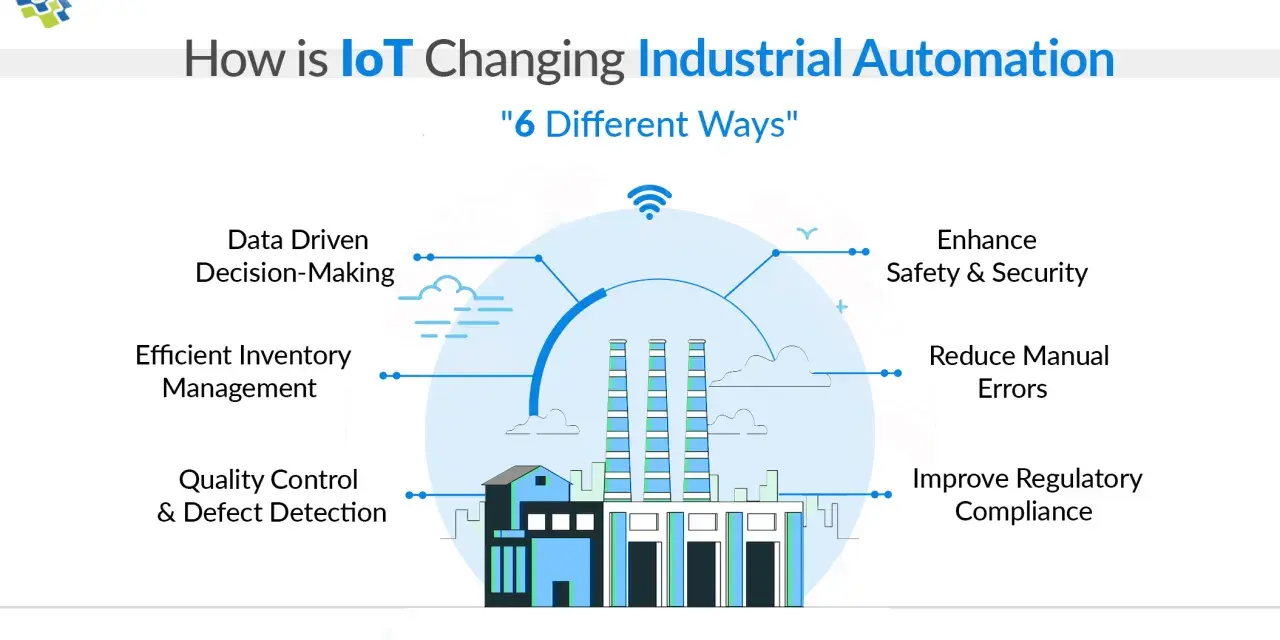
Connected devices only become useful when they change something in the real world. That is the practical promise of IoT and automation: sensors detect conditions, software interprets them, and workflows act without waiting for manual intervention. In the UK, where energy efficiency, resilience, and security matter as much as convenience, the difference between a clever dashboard and a working system is usually the quality of the automation behind it.
Key takeaways before you design the system
- IoT creates value when data leads to a decision, not when it just fills a dashboard.
- The strongest early use cases are repetitive, measurable, and expensive when done late: energy control, asset tracking, maintenance, and access management.
- A dependable system usually combines devices, an edge layer, a platform, and a rules engine rather than relying on one big cloud workflow.
- Security has to cover onboarding, patching, identity, and fallback behaviour from day one.
- A first pilot should be narrow: one site, one process, one owner, and a clear operational metric.
What changes when devices start driving decisions
At a basic level, IoT gives you measurement. Automation gives you response. Put them together and you get a control loop: a sensor notices temperature, vibration, occupancy, motion, pressure, or location; a system evaluates the signal; and an action is triggered. That action might be tiny, like adjusting lighting, or more serious, like opening a service ticket, isolating a machine, or stopping a process.
This is why I treat IoT automation as more than a convenience layer. The best systems reduce delay, reduce manual work, and reduce blind spots. They also make behaviour consistent, which matters when people are tired, busy, or working across multiple sites. The challenge is that not every signal deserves a reaction. If the trigger is noisy, the automation becomes noise too.
In practice, most teams use a mix of rule-based logic, edge processing, and cloud analytics. The table below is a useful way to separate them.
| Approach | What it does | Best for | Main limitation |
|---|---|---|---|
| Rule-based automation | Acts when a threshold or condition is met | Clear, repeatable decisions such as alerts, switching, and scheduling | Can be brittle if the rule set is too simple or too noisy |
| Edge-led automation | Makes decisions close to the device or gateway | Low-latency reactions, poor connectivity, safety-sensitive sites | Harder to manage at scale if governance is weak |
| Cloud-led automation | Aggregates data and coordinates workflows centrally | Cross-site optimisation, analytics, reporting, integrations | Depends on network stability and introduces latency |
| AI-assisted automation | Uses patterns and predictions to choose actions | Predictive maintenance, anomaly detection, demand forecasting | Needs clean data and careful human oversight |
I usually recommend that teams start simple. If a rule can solve the problem reliably, do not rush into model-heavy decision-making. The more critical the process, the more important it is to understand exactly why the system acted. That logic becomes the bridge to the next question: where does this combination produce value fast enough to justify the effort?
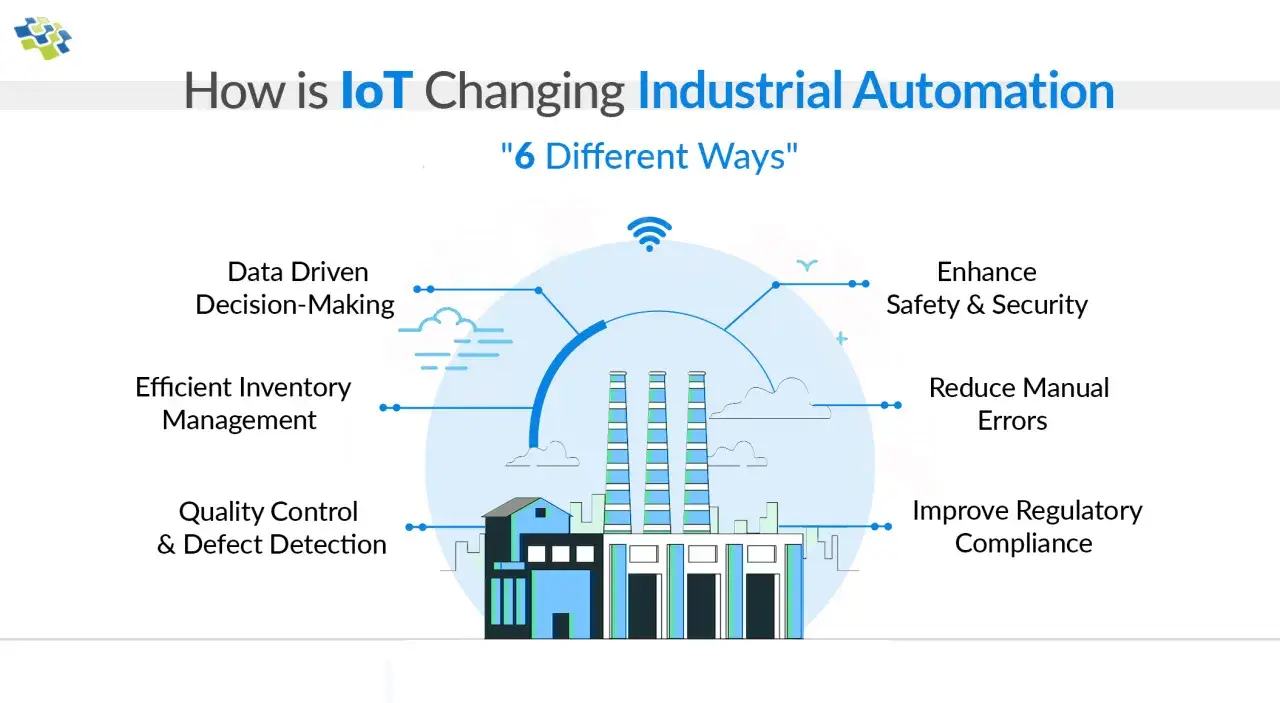
Where it pays off fastest
The quickest wins tend to sit in processes that are repetitive, measurable, and expensive when they go wrong. That is why the strongest use cases are usually not flashy consumer gadgets. They are buildings, plant rooms, warehouses, fleets, and connected equipment where a small delay or a missed condition has a real cost.
Smart buildings and estates
Heating, ventilation, lighting, and occupancy are the obvious candidates. If a meeting room is empty, the system should not cool it as if it were full. If a corridor is unused, lights can dim instead of staying bright all day. For UK organisations, that matters because energy waste is often visible on both the bill and the carbon report.
Manufacturing and maintenance
Vibration, temperature, current draw, and cycle counts can reveal machine wear before a failure becomes a stoppage. I find this is where connected devices start to feel indispensable, because the value is not only the alert itself but the time gained. A maintenance team that sees an abnormal pattern two days early can plan labour and parts instead of firefighting at 3 a.m.
Logistics and cold chain
Location tracking, route exceptions, and temperature monitoring help when goods move through multiple handoffs. The useful part is not only visibility. It is the ability to trigger an action when something drifts out of tolerance, such as sending an alert, rerouting a vehicle, or logging an exception automatically for later review.
Security and access control
Badge readers, door sensors, video analytics, and occupancy data can be tied into workflows that lock, unlock, alert, or escalate. The important caveat is that security automation should be conservative. False alarms are annoying, but false permissions are worse. That balance takes us directly into design and architecture.
If you are deciding where to start, my rule is simple: automate the process that is most repetitive and most costly to handle late, not the one that merely looks impressive in a demo.
The stack that makes it work
The phrase connected devices sounds simple, but the system underneath is layered. A good deployment usually has five parts: the device, the network, the edge or gateway, the platform, and the business workflow. If one layer is weak, the whole thing feels unreliable.
Here is the structure I look for.
| Layer | Role | What matters most |
|---|---|---|
| Device | Measures or controls something in the physical world | Accuracy, battery life, calibration, and lifecycle support |
| Connectivity | Moves data between device and platform | Coverage, latency, cost, and interference |
| Edge or gateway | Filters data and makes local decisions | Offline resilience and fast reaction time |
| Platform | Stores data, applies rules, and integrates with other systems | Reliability, visibility, and integration quality |
| Workflow | Turns events into human or machine actions | Clear ownership, good escalation, and auditability |
In more industrial environments, you will often hear about PLCs, which are programmable controllers used to run physical equipment, and gateways, which translate data between local devices and broader networks. In office or estate settings, the equivalents might be building management systems and service desk tools. The names change, but the design problem is the same: move from raw telemetry to a decision that is fast, traceable, and useful.
The reason I like this layered view is that it forces a practical question. Should the action happen locally, in the cloud, or both? If the answer is safety-critical or time-sensitive, keep the first response close to the device. If the answer depends on trend analysis across sites, centralise it. That distinction is where many projects either become dependable or get over-engineered.
Security and resilience are part of the design, not the afterthought
Every connected device increases the attack surface, and every automation rule increases the potential blast radius. That is the uncomfortable truth many teams underestimate. A thermostat is harmless until it can unlock a chain of building controls. A sensor is just data until it feeds a process that triggers something expensive or sensitive.
The UK’s NCSC has been clear for years that connected devices belong in the security conversation, not outside it. More recently, GOV.UK guidance on enterprise connected devices has also leaned toward automated enrolment, device management, and open standards. I read that as a sign that security is no longer just about blocking threats; it is about making device fleets manageable in the first place.
- Use strong identity for every device so you can tell one unit from another and revoke access cleanly.
- Segment the network so a compromised sensor does not sit on the same path as sensitive business systems.
- Plan patching from day one because devices that cannot be updated eventually become liabilities.
- Build a fail-safe mode so a lost connection does not create unsafe behaviour.
- Minimise the data you keep because occupancy, location, and access records can become privacy issues very quickly.
- Check supplier support windows so you are not buying hardware that will be abandoned before the business case pays back.
Reliability matters just as much as security. If the automation is supposed to reduce operational effort, it should not create a new alert storm every time the network blips. I prefer systems that continue working in degraded mode and recover cleanly when connectivity returns. That expectation makes the rollout phase much easier to manage.
How I would roll out a first project
The first mistake is usually trying to automate too much. The second is measuring the wrong thing. A good pilot is narrow, visible, and owned by one person who actually feels the pain point. I normally look for one site, one process, and one outcome. If a project needs a committee before it needs a pilot, it is probably too broad.
- Choose a process with a measurable delay. Good candidates include temperature excursions, energy waste, manual checks, or fault detection.
- Set a baseline before changing anything. I prefer at least 2 to 4 weeks of observation so you can see normal patterns, exceptions, and false positives.
- Start with a small fleet. For a first deployment, 10 to 30 devices is usually enough to prove the logic without drowning the team in maintenance.
- Define the trigger and the fallback. Every automation rule should say what happens when the signal is valid, and what happens when the signal is missing or suspicious.
- Connect the action to a real workflow. An alert that nobody owns is not automation; it is a notification.
- Review after 30 to 60 days. At that point you should know whether the system is saving time, reducing exceptions, or just making the dashboard look busier.
The decisions that separate useful automation from expensive noise
Most weak deployments fail for the same reasons: they chase data before defining action, they ignore network design, or they buy hardware without a lifecycle plan. The strongest systems do the opposite. They start with a business event, design the response, and only then choose the sensor and platform stack that supports it.
What I would keep in mind is simple. If the system cannot explain what it is doing, operators will not trust it. If it cannot work safely when part of the stack fails, they will not rely on it. And if it does not connect cleanly to the rest of the organisation, it will end up as a disconnected gadget with a monthly support bill.
That is why IoT works best when it is treated as an operational discipline, not a novelty. The goal is not to collect the most telemetry. The goal is to make decisions faster, better, and with less friction, so the people running the process can spend less time chasing problems and more time preventing them.